Indigenous Stories
The Memorial is honoured to be able to share the stories of Aboriginal and Torres Strait Islander people.

Naming Private Ngakyunkwokka
Uncovering the name and story of Private Charlie Bob Ngakyunkwokka has helped shape the Memorial’s understanding of cultural protocols and mourning practices of Indigenous communities.
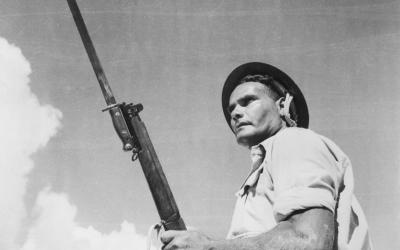
The Black Rats of Tobruk
The Australian War Memorial is committed to discovering the identities of Australian service personnel of Indigenous heritage. Research is continuing to reveal stories of the Indigenous presence among soldiers of the Second Australian Imperial Force.
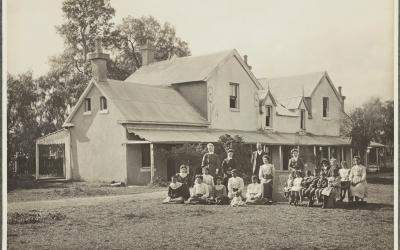
Indigenous Soldiers of the First World War and the Stolen Generation
In 1914 the Australian government placed a call for volunteers to fight a predominantly European war in the interests of the British Empire. Indigenous Australians answered that call in numbers. In doing so, they faced challenges other Australian volunteers did not.

Rare postcards shine a new light on Indigenous soldiers service
Jeannie Lister came across three silk embroidered postcards that caught her eye. With her love of embroidery and an interest in family history, she immediately recognised them as First World War souvenirs sent home by soldiers on the front lines.
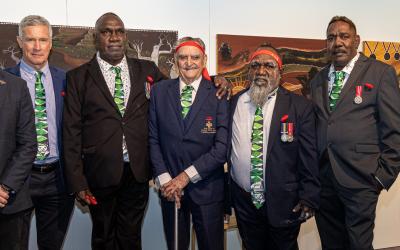
From massacres to medals – a story of redemption and recognition
The painted triptych shares the history of the Gija people’s experience of conflict in the East Kimberly region over the past hundred years.
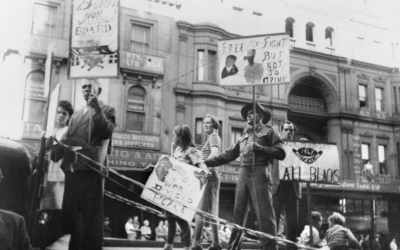
Service as Citizenship
Current Memorial research estimates that approximately 1,200 Indigenous Australian men attempted to enlist in the First World War.
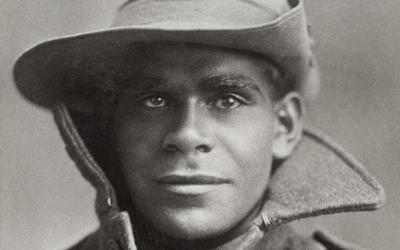
Honouring Private Miller Mack
Miller Mack was one of 21 Ngarrindjeri men from the Point McLeay Mission (now known as Raukkan) and the surrounding region to enlist for service in the Australian Imperial Force during the First World War.
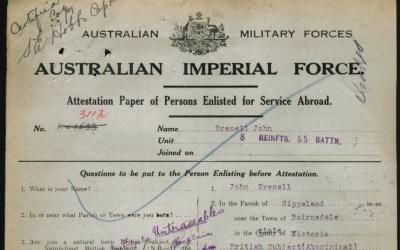
The curious case of John Brenell: The only known Jewish Aboriginal Australian First World War soldier?
There is only one identified Aboriginal Australian soldier buried among the hundreds of Commonwealth First World War graves at Outtersteene Communal Cemetery Extension.
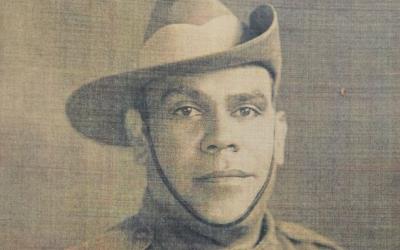
'He always said that the Bible in his pocket was the thing that saved him'
When Alfred Dow was hit by shrapnel during the Siege of Tobruk, a small pocket-sized copy of the New Testament saved his life. He was one of more than 50 “Black Rats of Tobruk” and one of more than 2,000 Indigenous Australians who served during the Second World War.